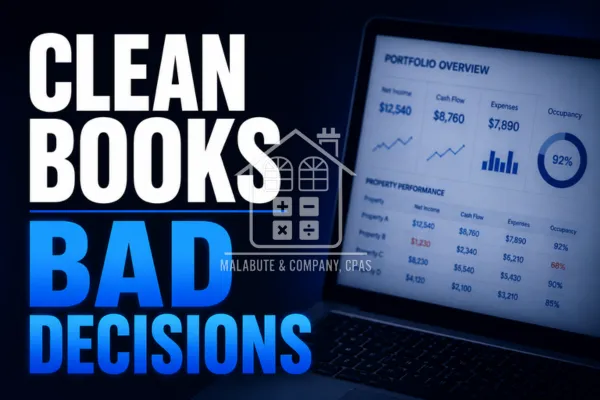
Why Your Real Estate Books Don’t Help Decisions
Most real estate investors don’t have a QuickBooks problem—they have a setup problem. I see this all the time. The numbers look clean on the surface, but when you actually dig in, they don’t tell you anything useful about the portfolio. If your bookkeeping can’t clearly show you what each property is doing, then it’s not helping you make decisions—it’s just there for tax time. QuickBooks only works if it’s structured around real estate, not like a generic business, and you should be able to clearly see performance by property instead of one combined set of numbers that hides what’s actually going on.
One of the biggest mistakes I see is investors not separating their properties. If you have multiple rentals and they’re all lumped together, you really have no idea which ones are performing and which ones aren’t. It’s very common for one property to carry the entire portfolio while another quietly underperforms, and most people don’t catch it because their reports aren’t set up to show it. You should be able to run a report at any time and immediately see how each property is doing so you can make decisions based on actual data instead of assumptions.
Another issue is how transactions are categorized, and this is where things start to break down. Repairs get mixed with improvements, personal expenses get blended into the business, and things like security deposits get recorded as income when they shouldn’t be. At that point, the books might look organized, but they’re not accurate. Security deposits should sit on your balance sheet as a liability, not show up on your profit and loss. Loan payments need to be split properly between principal and interest. These details matter because they directly impact how your numbers look and what decisions you make from them.
Automation helps, but it doesn’t fix a bad system. Connecting your bank accounts and setting up rules can save time, but if you’re just accepting transactions without reviewing them, errors start stacking up. Over time, those small errors turn into bigger issues, especially when you’re trying to rely on the numbers for planning or decision-making. Automation should support your process, not replace oversight.
At the end of the day, the goal isn’t just to have clean books—it’s to have numbers you can actually trust. When your system is set up correctly, tax prep becomes easier, conversations with lenders go smoother, and you’re able to move faster because you’re confident in your numbers. When it’s not, you end up second-guessing everything, missing deductions, and making decisions based on incomplete information.
If your bookkeeping isn’t giving you clear answers about your portfolio, it’s not doing its job. And in most cases, that’s not a QuickBooks issue—it’s a setup issue. Once that’s fixed, everything else becomes a lot more straightforward.